I. Subterranean Medieval Foundations
Before it was an art gallery, the Louvre was a military citadel built by Philip Augustus to protect Paris against Anglo-Norman attacks while he departed on the Third Crusade. In the 1980s, during the Grand Louvre excavations beneath the Cour Carrée, archaeologists unearthed the circular stone keep (the Grosse Tour) and defensive dry moat, now accessible to museum visitors in the Medieval Louvre wing.
II. The Renaissance Renaissance & Grand Galerie
In 1546, King Francis I commissioned the architect Pierre Lescot to demolish the medieval castle and erect a Renaissance palace following classical Vitruvian principles. Sculptor Jean Goujon carved the iconic Caryatids and classical reliefs. Later, King Henry IV constructed the extraordinary Grande Galerie—over a quarter-mile long—connecting the Louvre to the Tuileries Palace along the Seine riverbank.
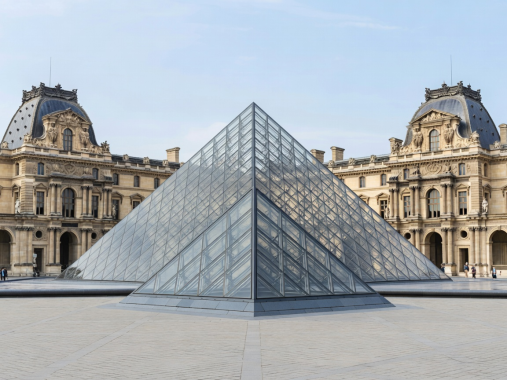
III. The Revolutionary Transition of 1793
On August 10, 1793, during the height of the French Revolution, the National Convention opened the palace as the Muséum central des arts de la République. Royal and aristocratic collections were declared national property, inaugurating the modern concept of the universal museum dedicated to public scholarship, conservation, and egalitarian access to world heritage.